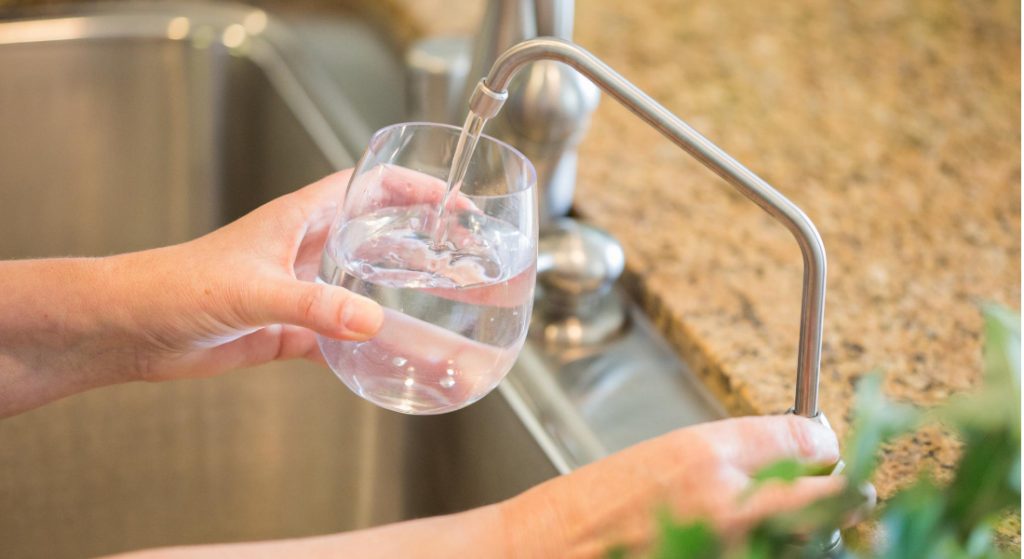
Any visitor to Singapore will definitely ask:
- Can tap water in Singapore be drank?
- Is it safe?
The short answer is yes! The water in Singapore is safe to drink straight from the tap – no matter where the water is from - be it hotels, homes or even public toilets.
According to the Public Utilities Board (PUB), the government water agency in Singapore, water in Singapore is among the few countries which fall within or exceed both the World Health Organization’s (WHO) drinking water guidelines and the US Environmental Public Health (Quality of Piped Drinking Water)’s Regulations.
How is Tap Water Produced in Singapore?
During water collection, rainwater is collected in canals, rivers and reservoirs. In fact, two thirds of our land are used to collect rainwater. This collected water is then sent to treatment plants to undergo the next process.

The treatment process includes:
- Coagulation and flocculation of collected water to aggregate suspended particles in
- Sedimentation to remove bigger heavier particles.
- Sand/membrane filtration to remove finer particles.
- Disinfection by Chlorine or Ozone to ensure no harmful bacteria and virus are left present in water.
After the treatment process, treated water is then sent to storage tanks, and pumped into the distribution system. Water will be stored in water tanks at the top of, or below HDB flats or private apartments. This ensures that once a tap is turned on, clean safe water is ready for consumption.
Ensuring Water Meets WHO Guidelines
In order to maintain safe drinking water standards, water samples are collected from waterworks and distribution systems to be tested at laboratories. Over 300,000 tests are conducted annually to ensure all parameters within the WHO water guidelines are met.
The Test Range Parameters include:
- Microbiological tests – Testing for the presence of Escherichia coli (E. coli), a bacterium that causes diarrhoea.
- Physical tests – Testing for turbidity or the clarity of water.
- Radiological tests – Testing for overall radioactivity in water, Gross Alpha, Gross Beta, Radon 222
- Chemical tests for:
-
- Arsenic which is naturally present in ground water in a number of countries. It is extremely toxic if consumed in high volumes or if long term exposure is present.
- Lead
- Mercury
- Uranium and more.
The above listed are only the few more common tests, in total the Singapore PUB water quality testing includes about 100 different parameters.